
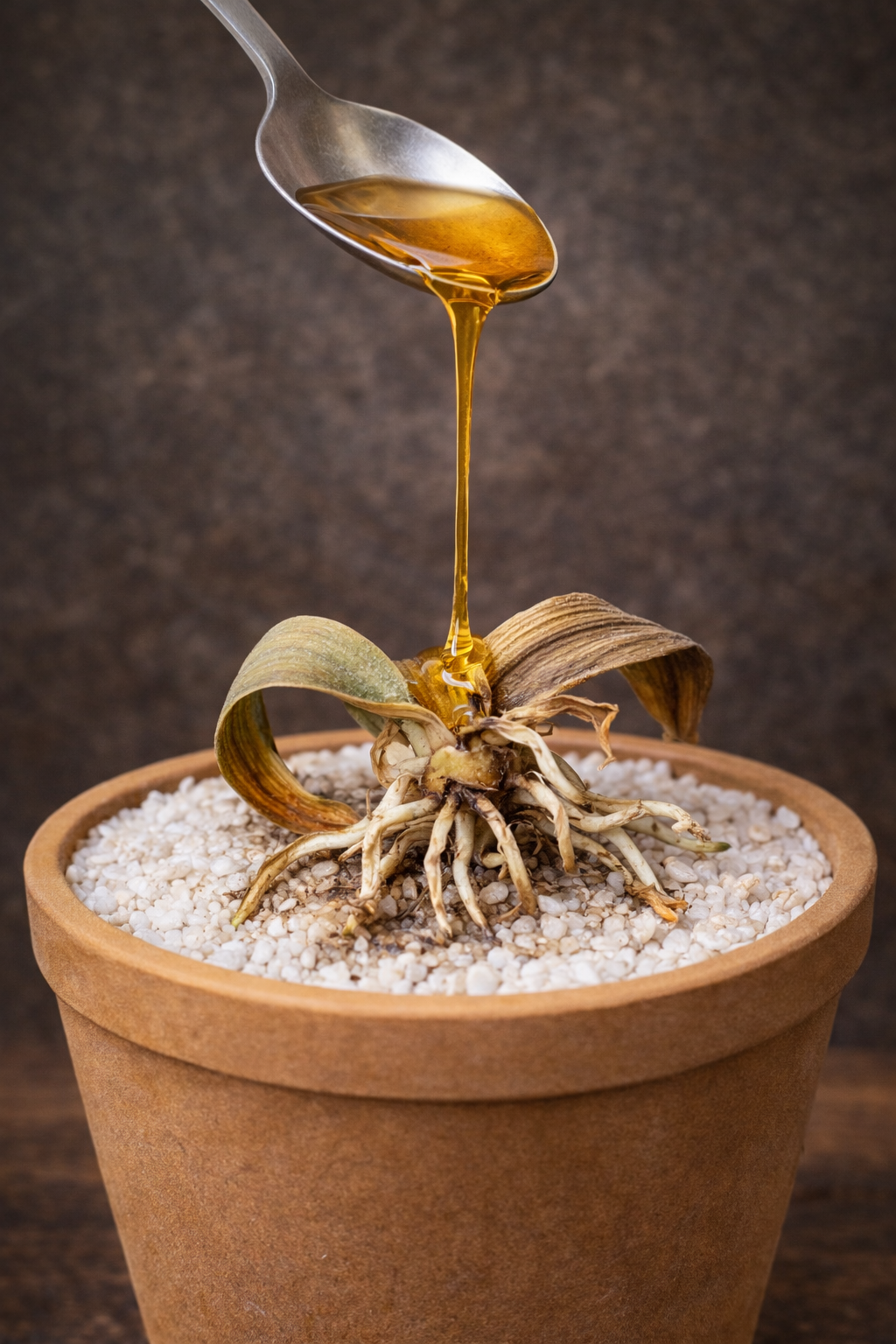
🌿 Why Gardeners Are Pouring This Golden Liquid on Orchid Roots (The Recovery Is Surprising)
Many indoor plant lovers are moving toward gentle recovery methods instead of strong fertilizers — especially when orchids start looking weak or dehydrated. Modern gardeners now focus on improving root balance, stable moisture, and clean growing environments rather than forcing fast growth.
Recently, one simple “golden liquid” method has gained attention because it helps support stressed orchid roots while keeping the plant looking elegant in modern indoor spaces.
This approach fits perfectly with minimalist plant care trends, luxury balcony decor, and premium indoor styling where orchids are treated as part of home design — not just houseplants.
🌱 Orchid Care Guide — Why Roots Suddenly Look Weak
Orchid roots can change fast depending on watering habits and airflow. When roots begin to shrink, dry, or lose color, the cause is usually environmental stress rather than lack of nutrients.
Most gardeners notice problems linked to:
✔️ Irregular watering routines
✔️ Poor airflow around roots
✔️ Heavy or compact growing media
✔️ Sudden temperature changes
✔️ Strong direct sunlight
Stabilizing these factors often improves recovery even before adding any support methods.
✨ The Golden Liquid Method (Gentle Root Support)
The goal of this method is simple — light hydration support instead of aggressive feeding.
Gardeners use a very mild golden liquid mix to:
• Support root moisture balance
• Reduce stress during recovery
• Encourage healthier root appearance
• Maintain a clean growing environment
The key idea is supporting roots slowly, not pushing fast growth.
🥄 Step-by-Step — How Gardeners Apply It
1️⃣ Check Root Condition First
Healthy roots should feel firm, not mushy.
2️⃣ Use a Very Diluted Mix
Strong solutions can overwhelm orchids.
3️⃣ Apply Near the Base Only
Avoid pouring directly onto leaves.
4️⃣ Keep Airflow Around Roots
Breathable media helps prevent stress.
5️⃣ Maintain Bright Indirect Light
Stable lighting supports gradual recovery.
📊 Orchid Root Recovery Table
| Factor | Ideal Condition | Why It Helps |
|---|---|---|
| Light | Bright indirect | Supports balanced growth |
| Media | Airy orchid mix | Improves airflow |
| Watering | Light + consistent | Prevents root shock |
| Temperature | Stable indoor | Reduces stress |
| Feeding | Gentle + occasional | Avoids overload |
❓ Orchid Garden FAQ (10)
1) Why do orchid roots look dry even after watering?
Airflow and drainage affect moisture retention.
2) Can strong fertilizer fix weak roots?
Heavy feeding can stress orchids more.
3) How often should this method be used?
Only occasionally as gentle support.
4) Should liquid touch the leaves?
No — focus only on root area.
5) What’s the best pot for orchids?
Breathable pots help airflow.
6) Does light affect root recovery?
Yes — stable indirect light is ideal.
7) Can beginners try this safely?
Yes, if used lightly.
8) Why are my roots turning pale?
Possible airflow or watering imbalance.
9) Is humidity important?
Moderate indoor humidity helps orchids.
10) Biggest mistake gardeners make?
Applying too much liquid too often.
Many modern homeowners now treat orchids as part of premium interior decor, combining natural plant care with clean, minimal styling. Balanced hydration and stable lighting help orchids maintain firm roots and glossy leaves — making them look healthier and more elegant in luxury home interiors, modern glass spaces, and minimalist balcony setups.